


A useful year-end close produces financial information that management can explain and support. It does more than total the year’s receipts. For UAE business owners, the priority is to establish a reliable cut-off, reconcile material balances and resolve issues before reports are finalised. This checklist helps organise the work with your accountant without assuming that every company has the same year-end or reporting requirements.
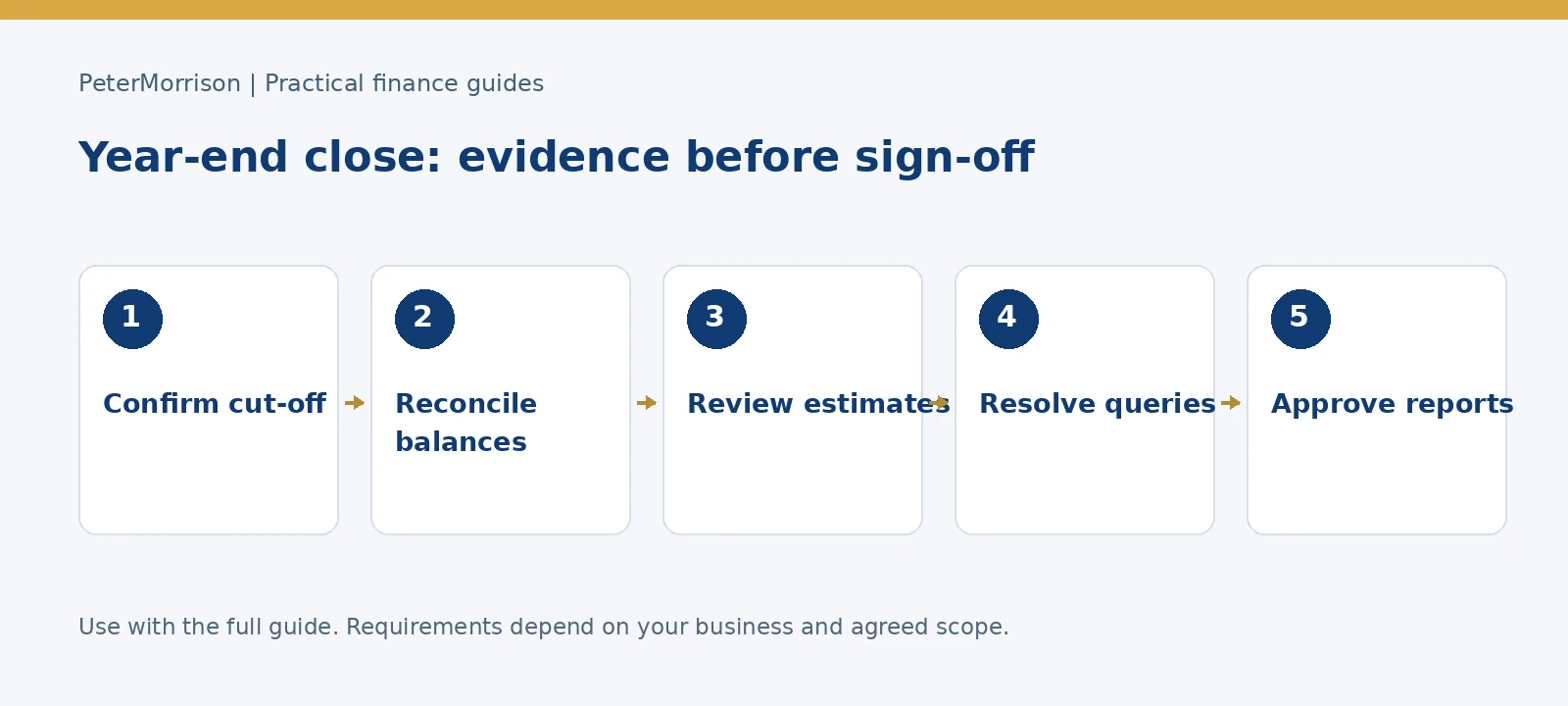
Confirm your actual year-end and deliverables
Check the entity’s financial year, accounting basis, reporting framework and the reports needed by owners, lenders, regulators or other users. A 31 December close is common, but it is not universal. Record the agreed reporting date, who prepares the accounts, who reviews them and whether an independent audit is separately required.
Create a close timetable working backwards from the reporting deadline. A document cut-off, a query-resolution date and a management review date are more useful than one final due date with no preparation milestones. Our monthly bookkeeping checklist covers recurring discipline; the annual close adds a broader review of balances, estimates and presentation.
Reconcile cash, customers and suppliers
- Match every bank and card account to its statement and investigate old reconciling items.
- Reconcile payment gateways and merchant settlements, including fees and amounts in transit.
- Review customer balances, disputed invoices, credit notes and aged unpaid amounts.
- Compare supplier statements with the ledger and identify invoices or credits not yet recorded.
- Review foreign-currency balances using the applicable accounting policy and supporting calculations.
- Explain any suspense accounts or clearing balances instead of rolling them forward unchanged.
For each material balance, retain the reconciliation, underlying evidence, preparer, reviewer and any unresolved issue. A balance that agrees arithmetically may still need a business explanation. For example, a long-outstanding customer amount may need further review even if it agrees to the invoice register.
Check transactions around the year-end cut-off
Review sales, purchases, returns and services delivered shortly before and after the reporting date. The date cash moves does not always determine the period in which a transaction belongs. Examine contracts, delivery evidence and relevant accounting policies before approving accruals or deferrals. Keep the reasoning with the adjustment rather than relying on a verbal explanation.
Separate owner funding, drawings, dividends and business income according to their actual nature. Where related parties or intercompany balances are involved, seek agreement on both sides and identify differences before consolidation or reporting. Tax treatment may require a separate assessment.
Review assets, liabilities and estimates
- Match the fixed-asset register to purchases, disposals and assets still in use.
- Organise inventory count evidence and investigate quantity or valuation differences where relevant.
- Review prepayments, accruals, deposits, loans and lease-related balances.
- Check payroll and employee-related balances against supporting schedules.
- Document material provisions, impairment considerations and other estimates under the applicable framework.
- Review events after year-end with the accountant before the statements are approved.
Do not post estimates simply to force a desired profit figure. Management should understand the assumptions, evidence and sensitivity of significant judgments. Matters requiring specialist advice should be identified early rather than hidden in a general “year-end adjustment”.
Prepare one review pack
A practical pack contains the trial balance, reconciliations, key schedules, an adjustments log, the draft reports and an open-issues list. Link each query to a responsible person and a response date. An unresolved matter should be visible at sign-off, with its impact and proposed treatment explained.
PeterMorrison can discuss year-end accounting support and CFO support around your reporting needs. If an audit is part of your requirements, use our audit-preparation guide to organise evidence; preparing the accounts does not itself provide audit assurance.
Keep accounting and tax deadlines separate
A financial reporting timetable and a tax filing timetable serve different purposes. Keep the applicable obligations in the same planning document, but give each a distinct owner and completion check. The Ministry of Finance Corporate Tax information is a starting point for current official requirements. Confirm your own tax period and status before using an example deadline.
Frequently asked questions
Is every UAE company’s year-end 31 December? No. Use the company’s actual financial year and confirm any approved changes.
Can year-end work begin before all documents arrive? Planning and reconciliations can begin, but missing evidence and unresolved judgments need a clear follow-up process before final approval.
Does a year-end accounting engagement include an audit or tax return? Only if specifically agreed and within the appropriate service scope. Ask for the deliverables and responsibilities in writing.
Plan your close before the reporting deadline
Share your year-end, accounting system, the last reconciled period and the reports you need. Discuss your year-end accounts with PeterMorrison to identify the work, dependencies and review timetable.
General information only. Accounting treatments and reporting obligations depend on the entity, its circumstances and the applicable framework.